


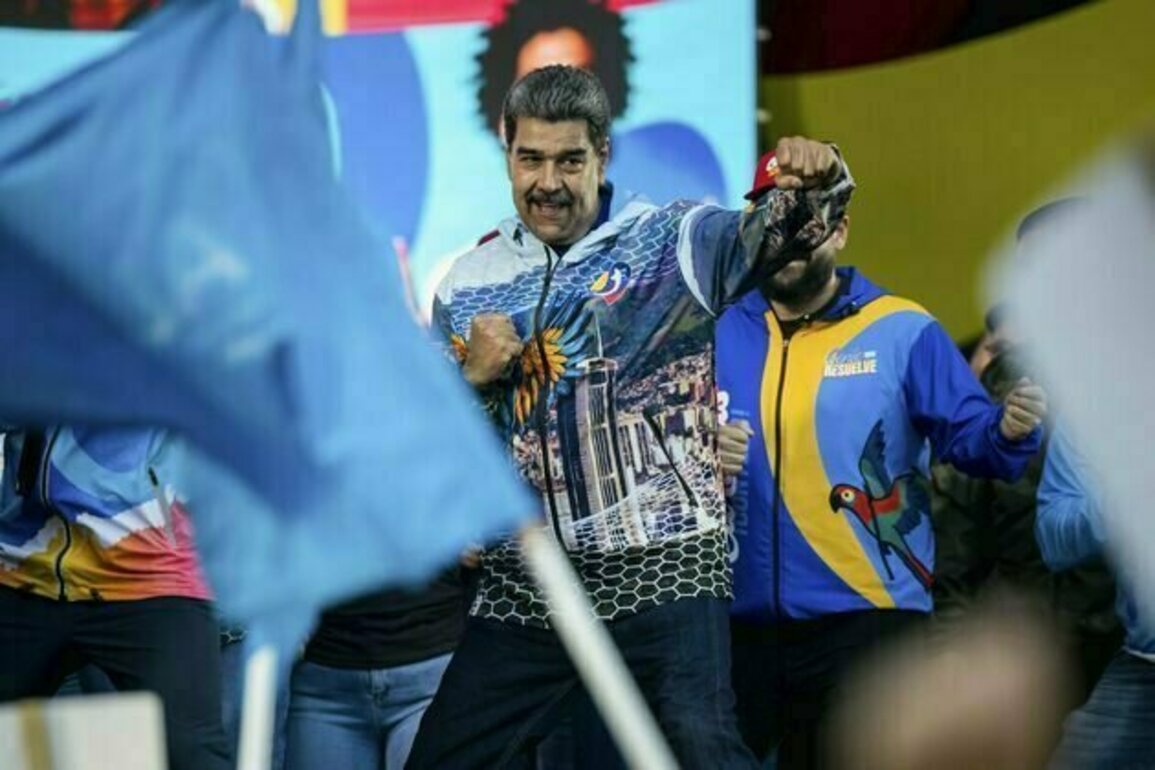
Venezuela's ruling party romped to victory in regional and legislative elections on May 25, winning over 82% of votes cast for the national assembly. The government-controlled national electoral council said candidates for the United Socialist Party of Venezuela (PSUV) won the race for governor in 23 out of the country's 24 states.
These elections saw a turnout possibly as low as 25% amid a partial opposition boycott. They were the first held since July 2024, when Nicolas Maduro secured a third consecutive term as Venezuela's president in a vote that was condemned internationally as fraudulent.
One thing that stood out in that 2024 election was the ability of the opposition to mount a credible challenge. Their unified backing of Edmundo Gonzalez as the presidential candidate, and the systematic gathering of evidence of electoral fraud from polling stations, reflected organisational strength and a coherent strategy.
However, that unity has since eroded. Protests against the 2024 result were met with a harsh government crackdown which included killings and mass detentions. Subsequently, Venezuela's opposition became deeply divided over whether to participate in the most recent elections.
Veteran opposition leader Maria Corina Machado, who was barred from running for the presidency and has been in hiding since July, called on her supporters to boycott them. She said that participating would only serve to legitimise Maduro's electoral fraud.
In contrast, a faction led by two-time presidential candidate Henrique Capriles viewed participation as an opportunity to reclaim political space. Capriles framed electoral participation as a form of protest, arguing that abstention only serves to strengthen Maduro.
Capriles claimed that victory in the 2015 parliamentary elections, which saw opposition parties win two-thirds of the seats in the national assembly, had been made possible by unity - whereas the decision by most of the opposition not to participate in the 2018 presidential election had effectively handed Maduro power.
In the May 2025 elections, Capriles and his supporters actively campaigned to encourage voter turnout - while the Machado camp accused those participating of cooperating with the Maduro regime. The debate was marked by accusations of betrayal and a lack of dialogue.
Venezuela's opposition parties have boycotted elections on several occasions over the past 25 years, as the government has tightened its authoritarian grip. But the decision has often had damaging consequences.
The most consequential boycott was in 2005, when a broad coalition of opposition parties withdrew from elections to the national assembly, citing concerns about voting irregularities and media bias. The move backfired.
The government, then led by Maduro's PSUV predecessor Hugo Chavez, did not face international backlash. It won every seat and gained a supermajority that enabled constitutional changes, including expanded executive powers. The opposition lost its institutional foothold to challenge legislation.
The boycott also deepened internal rifts within Venezuela's opposition. It entrenched the divide between moderates who favoured political engagement and hardliners who were scept